Emergency Tips
Sewer Backup in Your Basement? Do This First
Water coming up the floor drain is a main sewer line problem. Stop using water, stay safe, skip the chemicals, and learn why older North Jersey sewers back.
By Master’s Plumbing 6 min read
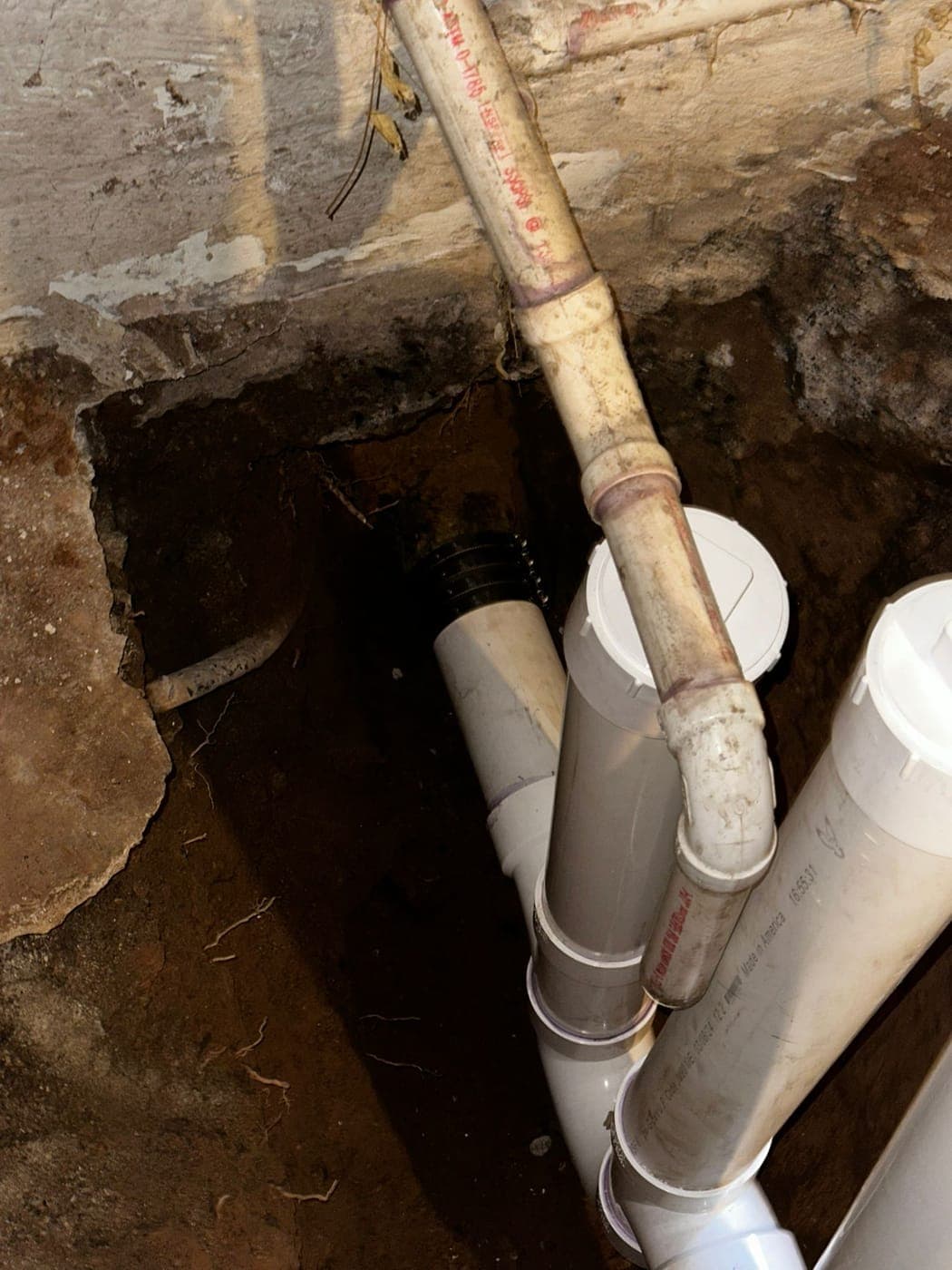
Water, or worse, coming up the floor drain, the basement toilet or the laundry tub is a main sewer line problem. Nothing downstream of that point is going anywhere. Here is what to do right now, what not to do, and what usually causes it in older North Jersey homes.
Sewage in the basement is a health hazard and a 24/7 call. Master's Plumbing: 862-666-2155.
Stop using water. All of it.
This is the most important step and the one people skip. Every flush, shower, dishwasher cycle and laundry load anywhere in the house goes into the same pipe. If that pipe is blocked, the water comes back up at the lowest opening, which is your basement. Tell everyone in the house: no toilets, no sinks, no showers, no laundry until the line is cleared.
Turn off the washing machine and dishwasher if a cycle is running. If you have a sump pump that discharges into the sewer, which is not allowed in most towns but is still found in older homes, switch it off as well.
Stay out of it, and protect yourself
Raw sewage carries bacteria and viruses. Keep children and pets out of the basement. If you must go in to move something, wear rubber boots, gloves and, ideally, a mask, and wash thoroughly after. Do not touch outlets or the electrical panel if the water is near them. Shut the basement breakers from a dry location if you can, or leave them alone.
Ventilate. Open basement windows if you have them. Sewer gas is unpleasant, and in a closed space it is not something to breathe for long.
Do not pour chemical drain cleaner into it
Chemical drain openers do nothing for a main line blockage. They turn the standing water into a caustic pool that a technician then has to work in, and they damage older cast iron and can soften PVC joints. Skip them, along with any product that promises to dissolve roots overnight.
Do not plunge the floor drain either. There is nothing to plunge against, and you will spread the water.
Check the floor drain and any backwater valve
Most basement floor drains have a removable grate, and some older homes have a check plug in the drain. If you have a backwater valve on the main line, it is a box in the floor with a lid, usually near the front wall. You can lift the lid and look to see whether the flap is stuck open with debris. Do not put your hand in the line. If it is clearly fouled, that is a job for the tech.
If you have no backwater valve, this is the moment to think about one. It is a one-way flap on your main line that lets sewage out but stops it coming back in. For finished basements in towns that surcharge during storms, it is the single most useful piece of protection we install.
Why sewers back up in older NJ homes
Much of the housing stock in Union, Essex and Hudson counties was built before 1970, and the sewer lateral, the pipe from the house to the street, is often the original.
- Clay pipe joints: vitrified clay laterals are laid in short sections with a joint every few feet. Each joint is a place roots can get in and soil can wash through, and over decades the pipe cracks and shifts.
- Tree roots: mature street trees on older blocks send roots straight to those joints. Roots start as a hair-fine mat that catches paper and grease, then thicken into a full blockage.
- Cast iron under the basement floor: cast iron corrodes from the inside. The bottom of the pipe channels out, leaving a rough surface that catches everything that passes.
- Grease and wipes: kitchen grease cools and hardens in the line, and so-called flushable wipes do not break down. Together they build a plug that a root mat holds in place.
- Bellies and offsets: a section of pipe that has sunk holds standing water and sediment, and a joint that has shifted creates a lip that catches debris.
Heavy rain and municipal surcharge
Sometimes the backup is not your pipe at all. Many older North Jersey towns have combined or leaky sewer systems. During a hard rain the municipal main fills, and the water level rises up your lateral and out your floor drain. The clue: it happens during or right after heavy rain, it is mostly water rather than solids, and it goes down on its own when the rain stops.
A camera inspection tells the two apart. A blocked lateral shows up on camera. A clear lateral with backups only in storms points to surcharge, and the fix on your side is a backwater valve, not another drain cleaning.
What happens when we arrive
- We find the cleanout, usually a capped pipe in the basement floor or on the main stack, and run a cable machine or hydro jetter down the line to open it.
- Once it drains, we run a camera through the lateral to the street and show you what is in it: roots, grease, a broken section, an offset joint, or nothing at all.
- We tell you plainly whether this was a one-time clog, a maintenance issue, or a pipe that is failing, and what your options are.
- You get a firm price before any additional work starts.
After the water is gone
Everything porous that touched sewage should go: carpet, padding, cardboard, and drywall that wicked it up. Hard surfaces get cleaned and disinfected. Run a dehumidifier. Photograph everything for your insurer; sewer backup coverage is often a separate rider, so check your policy before you assume it is covered.
When to call Master's Plumbing
As soon as you see water coming up a floor drain or basement fixture. Call 862-666-2155, day or night. We clear the line, camera it, and tell you what is going on in plain language. If your basement backs up every heavy rain, call before the next storm and ask about a backwater valve.
Related services
- Sewer RepairSewer backing up or roots in the lateral? Master's Plumbing repairs and replaces clay and cast iron sewer lineLearn more
- Drain CleaningSlow or clogged drain? Master's Plumbing clears kitchen, bath, laundry, floor and main drains for homes and buLearn more
- Camera InspectionBuying a home or chasing a repeat clog? Master's Plumbing runs sewer camera inspections across North Jersey wiLearn more
- Hydro JettingGrease, roots or scale keep coming back? Master's Plumbing hydro jets drain and sewer lines for homes and restLearn more