Emergency Tips
How to Find and Shut Off Your Main Water Valve
Where the main water shutoff is in a typical North Jersey home, how gate and ball valves work, what the curb stop is, what to do when the valve is stuck,.
By Master’s Plumbing 5 min read
Every adult in the house should know where the main water valve is and how to close it. It is the single most useful piece of plumbing knowledge you can have. When a pipe bursts, a supply line under a sink lets go, or a water heater splits, closing this valve turns a disaster into a cleanup.
Do this today: go find your valve, then come back and read the rest. It takes five minutes and you will be glad you did it before you needed it.
Where the main valve is in most North Jersey homes
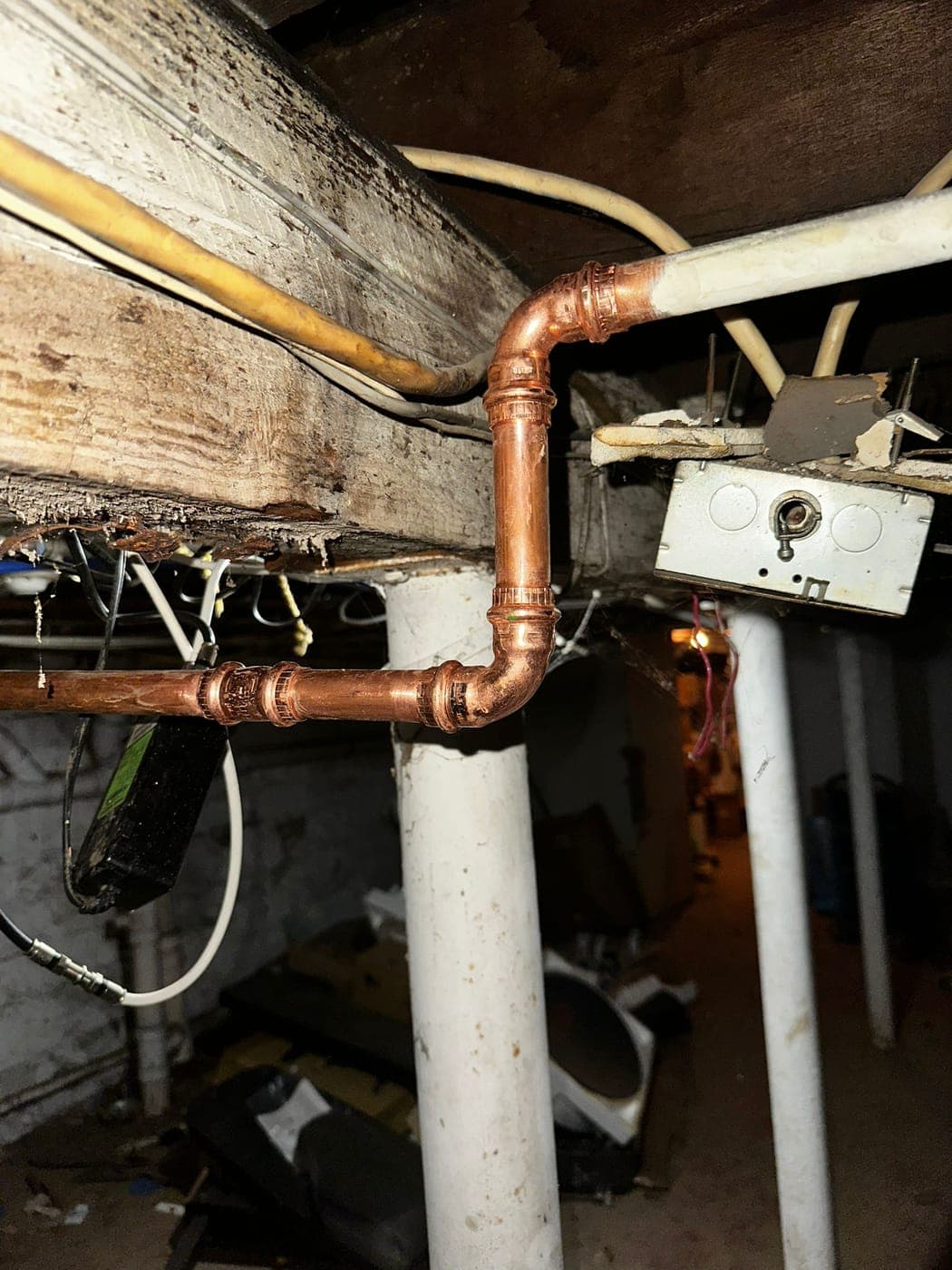
Municipal water enters the house through the foundation on the street side. In the typical Union, Essex or Bergen County home with a basement, the water service comes through the front foundation wall a few feet below grade and goes straight into the water meter. The main shutoff is on that pipe.
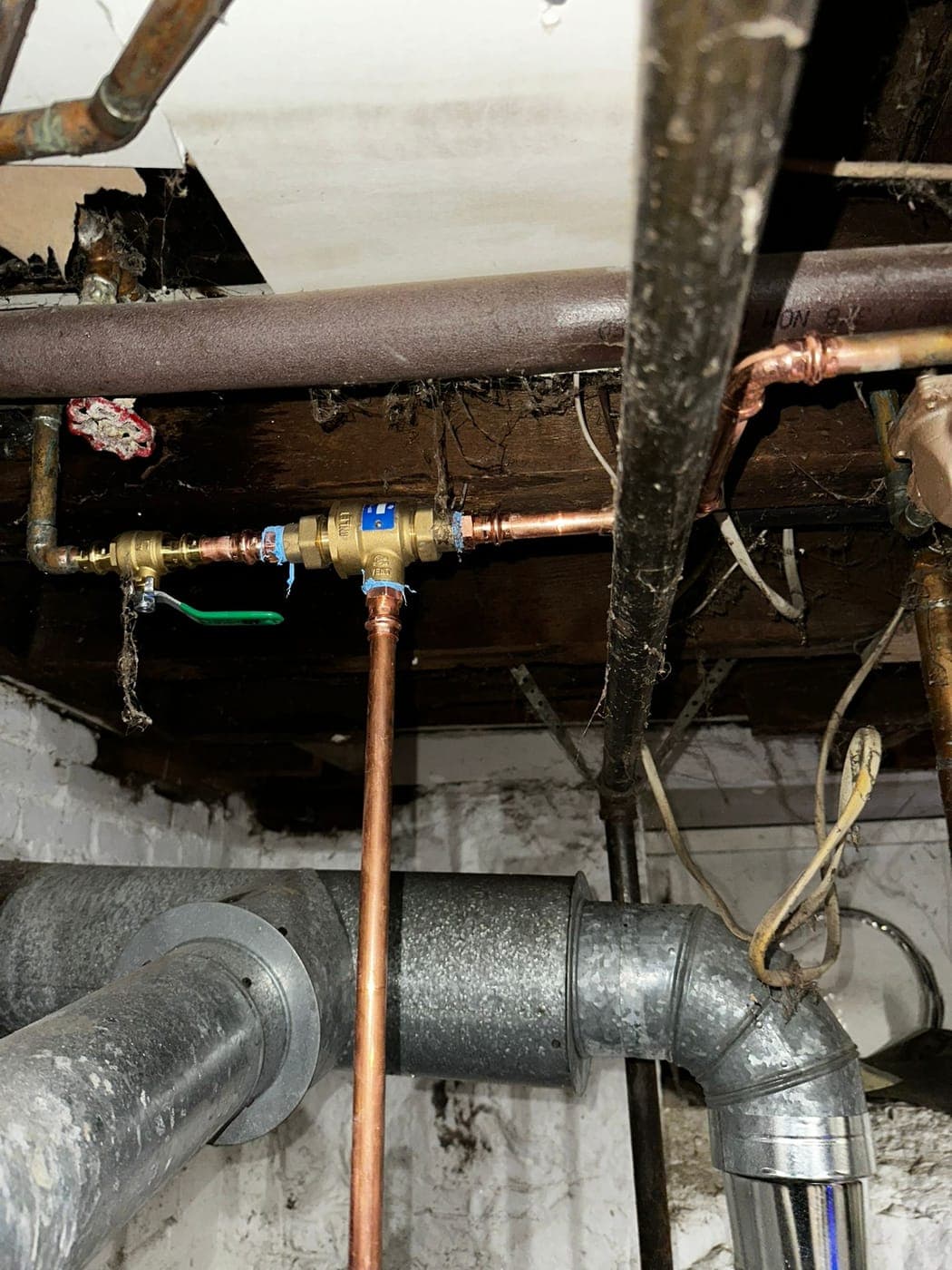
There are usually two valves: one on the street side of the meter and one on the house side. Either one shuts the house down. Use the house-side valve if it works. The street-side valve is often the older of the two, and in some towns it belongs to the water utility.
In homes without a basement, slab ranches and some split-levels, look in the garage, a utility closet, the laundry room, or near the water heater. In some houses the meter has been moved to a pit outside, and the house valve is where the pipe first comes up through the floor.
If you cannot find it, follow the pipe. Start at the water heater, find the cold line feeding it, and trace it backward. It leads to the meter and the valve.
Gate valve or ball valve?
Gate valves
A round wheel handle, usually brass, and often the original valve from when the house was plumbed. Turn it clockwise to close. It takes several full turns. These valves wear out. The gate inside corrodes, the stem strips, and sometimes the handle spins without closing anything. An old gate valve that has not been turned in years may not seal fully, or may start leaking at the packing nut as soon as you move it.
Ball valves
A lever handle. A quarter turn closes it: lever in line with the pipe is open, lever across the pipe is closed. Ball valves are what we install today. They close fast, seal fully and rarely stick. If your main is an old gate valve, replacing it with a ball valve is a small job. Do it before you need it in an emergency, not during one.
The curb stop: the utility's valve
Outside, usually in the sidewalk or the strip between the sidewalk and street, there is a small round cast iron cover, often marked WATER. Under it is the curb stop, the valve on your service line before it reaches the house. It sits several feet down and needs a long-handled curb key to operate. This is the valve the water utility uses to shut a house off.
If your indoor valve is broken, the curb stop is how the water gets shut. In most towns homeowners are not supposed to operate it, and forcing an old curb stop can break it. Call us, or call your water utility's emergency line. We carry curb keys and will shut the water at the curb when the house valve fails.
What to do if the valve is stuck
- Do not use a pipe wrench, pliers or a hammer on the handle. Gate valve stems snap and then you have no valve at all.
- Put a little penetrating oil on the stem where it enters the valve body and wait a few minutes.
- Work it back and forth in small movements to break the corrosion loose rather than forcing it in one direction.
- If it will not budge, or the handle spins freely and does nothing, stop. Use the curb stop route above.
- If the valve starts weeping at the stem after you turn it, a gentle snug on the packing nut, the nut directly behind the handle, usually stops it. Do not overtighten.
Test it twice a year
A valve that is never used seizes. Close and reopen your main every spring and fall. Close it fully, open a faucet to confirm the water stops, then open the valve all the way again. On a gate valve, open it fully and then back it off a quarter turn so it does not stick in the open position.
If it does not fully stop the water, or it leaks when moved, that is the time to replace it. Tie the test to something you already do, like changing the clocks or shutting down the hose bibs for winter.
Per-fixture shutoffs
Most fixtures have their own small shutoff so you do not need to kill the whole house for a small problem.
- Toilets: a small oval or lever valve on the wall or floor behind the bowl, on the supply tube.
- Sinks: two valves under the cabinet, one hot and one cold.
- Water heater: a valve on the cold inlet on top of the tank. Closing it stops water going in; the tank still holds its contents.
- Washing machine: two valves behind the machine. If the hoses are old rubber, replace them with braided stainless and turn the valves off when you travel.
- Dishwasher: usually shares the kitchen sink hot valve, or has its own stop under the sink.
- Outside hose bibs: many have an interior shutoff on the pipe just inside the foundation wall, often with a small drain cap for winterizing.
These small valves fail the same way the main does. Cheap multi-turn stops under sinks are known for leaking at the stem once they are moved after years of sitting. If one starts dripping, close the main and have it replaced with a quarter-turn stop.
When to call Master's Plumbing
If you cannot find your main valve, it will not close, it leaks when you move it, or you would like it replaced with a reliable ball valve before winter, call Master's Plumbing at 862-666-2155. For an active leak with a valve that will not shut, call right away. We answer 24/7, we can shut the water at the curb, and we replace main valves, meter valves and fixture stops throughout North Jersey.
Related services
- Emergency PlumbingBurst pipe, sewer backup, no hot water? Master's Plumbing answers 24/7 across North Jersey with licensed emergLearn more
- Water LinesWet lawn, low pressure or a spinning meter? Master's Plumbing repairs and replaces water service lines from thLearn more
- MaintenanceAnnual plumbing inspections, water heater flushes and pre-purchase checks across North Jersey.Learn more
- Leak DetectionWater bill up, ceiling stain, damp floor? Master's Plumbing finds hidden leaks in walls, ceilings and slabs acLearn more