Water Heaters
Water Heater Leaking? What It Means and What to Do Now
Where water heater leaks come from (T&P valve, drain valve, fittings, or the tank itself), how to shut it down safely, when repair makes sense, and why.
By Master’s Plumbing 6 min read
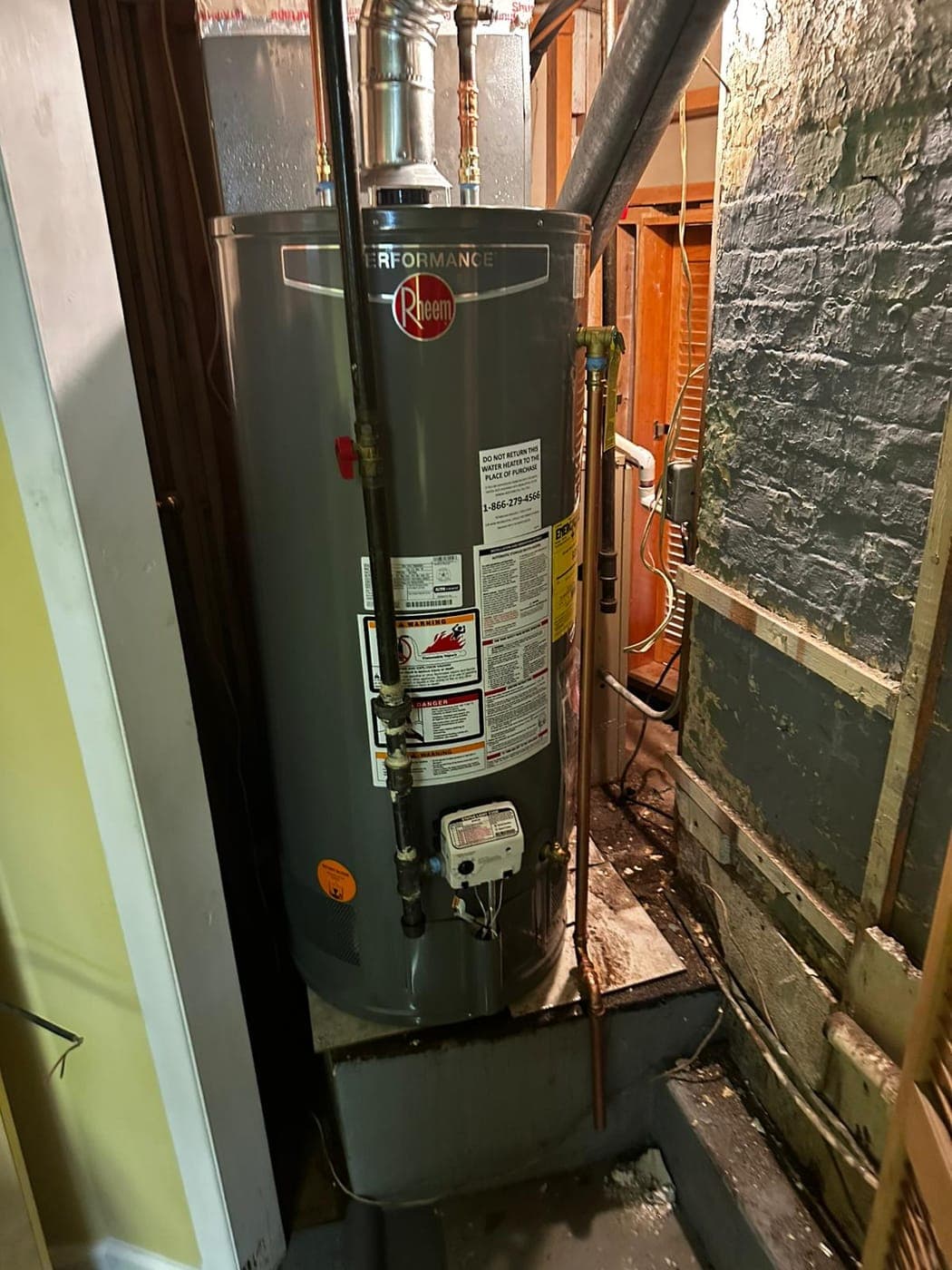
Water on the floor around the water heater is one of the most common calls we get, and the right response depends on where the water is coming from. Some leaks are a small repair. A leak from the tank itself means the heater is done. Here is how to tell the difference and what to do in the meantime.
If water is actively running out of the heater, close the cold water valve on top of the tank and call 862-666-2155. We replace water heaters the same day in most cases.
First, stop the water and the heat
- Close the cold inlet valve. It is on the cold pipe going into the top of the tank. Lever across the pipe, or wheel turned clockwise until it stops. This stops new water coming in; the tank still holds what is in it.
- Gas heater: turn the gas control knob on the front of the heater to Pilot or Off. Do not run a gas heater while the tank drains; you can crack the tank or damage the burner.
- Electric heater: turn off the breaker for the water heater, usually a double-pole breaker. Elements exposed to air burn out in seconds.
- If water is spreading, put down a tarp or towels and move belongings. If the heater is next to a furnace or the electrical panel, be careful with power.
- If the tank has to be drained, connect a garden hose to the drain valve at the bottom and run it to a floor drain or outside. Open a hot faucet upstairs to let air in.
Where the water is coming from
Dry the area, then watch. Leaks show up in four main places.
1. The temperature and pressure relief valve
The T&P valve is on the top or upper side of the tank with a discharge tube running down toward the floor. It is a safety valve that opens if the tank gets too hot or the pressure gets too high. Water from that tube means one of three things: the valve is worn and weeping, the tank is overheating, or the house pressure is too high, often because there is no expansion tank. The valve itself is a cheap part. The reason it is opening usually is not.
Never cap or plug a T&P discharge. That valve is what keeps a water heater from becoming a pressure vessel failure.
2. The drain valve
The drain valve at the bottom of the tank is often a plastic hose-bib style valve. They drip after being used to flush the tank, or just from age. Sometimes a brass hose cap stops it. Otherwise the valve gets replaced, which we can usually do without fully draining the tank.
3. Inlet and outlet fittings on top
Water on top of the tank, or running down the sides from the top, points to the connections: the hot and cold nipples, the flex connectors or unions, or the dielectric fittings that corrode where copper meets steel. Green or white crust around a fitting is the giveaway. These are repairable, and this is the leak most often misread as a tank failure.
4. The tank itself
Water seeping from the bottom of the outer jacket, from the seam, or pooling under the tank with no wet fittings above means the inner steel tank has rusted through. There is no repair for this. The heater needs to be replaced, and the leak will only get worse. Sometimes you will see rust-colored water at the hot taps for weeks before it starts leaking.
A useful check: if the drip is warm and continues steadily with the inlet closed, it is almost always the tank.
Repair or replace?
Repair makes sense when the tank is sound and the leak is a valve, a fitting or a connector, particularly on a heater that is not near the end of its expected life. Replace when the tank is leaking, when an older heater needs a costly repair, or when the unit is already showing rust at the fittings, rumbling and popping from sediment, or falling hot water capacity.
Find the age. The manufacture date is encoded in the serial number on the rating label, and many labels print it outright. If you cannot read it, tell us the brand and serial number and we will decode it.
Age, anode rods and why tanks fail
Inside every tank water heater is a sacrificial anode rod, a magnesium or aluminum rod that corrodes so the steel tank does not. Once the rod is used up, the tank starts to corrode. With the harder municipal water in much of North Jersey, the rod goes faster and sediment builds on the bottom of the tank, which insulates the burner, causes the rumbling noise, and stresses the steel.
Replacing the anode rod every few years and flushing sediment annually can meaningfully extend a tank's life. It is a maintenance item almost nobody does. If your heater is still young and sound, ask us to check the rod on the next visit.
Expansion tanks and high pressure
If your T&P valve keeps discharging and the heater is not overheating, the likely cause is thermal expansion. Water expands as it heats. In a house with a check valve or pressure-reducing valve at the meter, common on newer meter setups, that expanded water has nowhere to go, and pressure spikes every time the heater runs. The T&P dumps a little water each cycle.
The fix is a small expansion tank on the cold line near the heater. Many NJ towns require one on new installations. If you do not have one and the relief valve keeps dripping, it is worth adding.
What we do on the visit
- Find the actual source of the leak, not just the wet spot.
- Check house water pressure and test the T&P valve.
- Repair valves, fittings and connectors on a sound tank.
- Quote a replacement on the spot if the tank is gone, gas or electric, tank or tankless, and install the same day when possible.
- Bring the installation up to code: drip pan, expansion tank, proper venting, and the permit.
When to call Master's Plumbing
Any active leak, any tank seeping from the bottom, or any relief valve that will not stop discharging. Call 862-666-2155. We answer 24/7, we carry common water heater parts and replacement units, and we give you a firm price before we start. No hot water in winter is treated as an emergency.
Related services
- Water HeatersNo hot water or a leaking tank? Master's Plumbing repairs and replaces gas, electric and tankless water heaterLearn more
- Emergency PlumbingBurst pipe, sewer backup, no hot water? Master's Plumbing answers 24/7 across North Jersey with licensed emergLearn more
- Leak DetectionWater bill up, ceiling stain, damp floor? Master's Plumbing finds hidden leaks in walls, ceilings and slabs acLearn more
- Gas LinesSmell gas? Leave, call your utility, then call 862-666-2155. Master's Plumbing repairs gas leaks and runs new Learn more