Heating
No Heat? Boiler Troubleshooting Steps for North Jersey Homes
Boiler out? Check the thermostat and zones, the emergency switch, the pressure gauge, the water level on a steam boiler, trapped air in baseboard, and the.
By Master’s Plumbing 6 min read
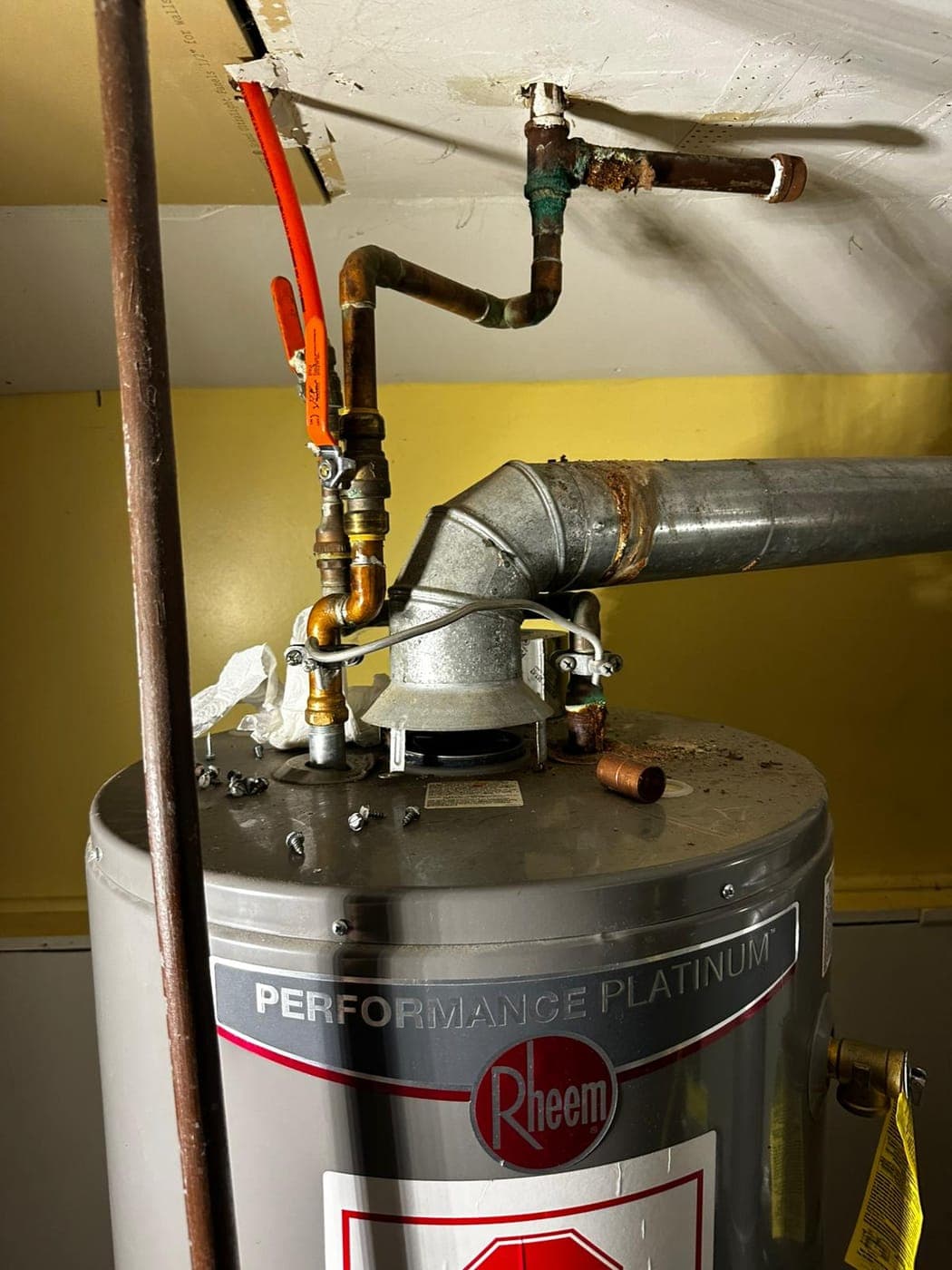
Much of North Jersey heats with a boiler: hot-water baseboard or radiators in postwar homes, steam radiators in the older two-families and pre-war houses of Essex, Hudson and Union counties. When a boiler stops, the checks are different from a furnace. Here is what to look at before you call, and where to stop.
Smell gas? Leave the house and call the gas utility from outside. Carbon monoxide detector sounding? Get out and call 911. Do not troubleshoot either one.
1. Thermostat and zones
Confirm the thermostat is set to Heat and above room temperature. Replace the batteries if it uses them. If your house has several zones, one cold zone with the rest of the house warm is a zone valve, a zone circulator, or that thermostat, not the boiler itself. If every zone is cold, keep going.
Listen at the boiler when you raise the thermostat. You should hear a click from a relay or zone valve, then a circulator hum, then the burner lighting. Where the sequence stops tells you where the fault is.
2. Power switch and breaker
Boilers have an emergency switch, often at the top of the basement stairs or on the wall by the unit, usually with a red cover plate. It looks like a light switch and it gets turned off by accident. Then check the breaker for the boiler in the panel. Reset a tripped breaker once. If it trips again, stop.
3. The pressure gauge, in plain terms
A hot-water boiler has a round gauge on the front or top, often with two needles, one for pressure and one for temperature. On a typical residential system the pressure needle sits in the low teens (psi) when the boiler is cold and rises somewhat as it heats. The relief valve on the side is set to open well above that. What you are looking for is a reading that is far from normal.
- Pressure near zero: the system has lost water. A low-water cutoff may have locked the boiler out, and the circulator may be running with nothing to move. Look for water on the floor, a dripping relief valve, or a leak at a radiator or baseboard. A leaking system needs a plumber, not just more water.
- Pressure high, near the top of the gauge: the expansion tank has likely failed or is waterlogged, and the relief valve is probably dripping. Shut the boiler off and call.
- Temperature climbing but no heat in the house: the circulator pump is not moving water. It should be warm and humming. A seized or dead circulator is a common and quick repair.
If the pressure is a little low and you have a fill valve you know how to use, you can add water slowly to bring the needle up. If you have never done this, do not start now: overfilling opens the relief valve and puts water on the floor.
4. Water level on steam boilers
Steam boilers have a glass tube on the side, the sight glass. The water should sit roughly in the middle of it. If the glass is empty, the low-water cutoff has shut the burner down to protect the boiler, which is exactly what it should do. Do not add water to a hot, empty steam boiler; let it cool first, then feed slowly. If it needed a lot of water, there is a leak, possibly in a return line under the floor, and it needs to be found.
If the glass is full to the top, the boiler is flooded, and it may bang and surge. Drain it down to the middle. An automatic feeder that overfills is a common cause.
A sight glass with dark, dirty water that bounces up and down means the boiler needs a flush and skim. Bouncing water trips the low-water cutoff on and off, and the heat comes and goes.
5. Bleeding air from baseboard and radiators
On a hot-water system, air trapped in the piping stops circulation. The symptoms: the boiler runs hot, the pipes near it are hot, but a loop or a radiator stays cold, often on the top floor, and you hear gurgling in the walls.
- Find the bleed valve on the radiator or at the end of a baseboard run: a small square or slotted stem, or a tiny valve with a small outlet.
- Hold a cup under it and open it slowly with a bleed key or screwdriver. Air hisses out.
- Close it as soon as water runs steadily.
- Check the boiler pressure after bleeding and top up if it dropped.
If you are bleeding the same radiator every week, air is getting in somewhere: a failed expansion tank, a bad automatic vent, or a leak that lets air in as the system cools.
6. Pilot and ignition
Older boilers have a standing pilot, a small flame that runs constantly. If it has gone out, follow the relighting instructions on the boiler's label, and only if you are comfortable doing it. A pilot that keeps going out is usually a failed thermocouple, a quick part.
Newer boilers use electronic ignition. Watch and listen when the thermostat calls: a spark or a glowing ignitor, then flame. If the ignitor tries and no flame appears, or the flame lights and shuts off after a few seconds, the ignitor, flame sensor or gas valve is the fault. Many boilers flash a code on the control; note it for us.
Stop and call if
- The relief valve on the side of the boiler is discharging steadily.
- There is water on the floor under the boiler that is not from a radiator.
- A hot-water boiler is banging loudly. Steam systems knock more normally, but new, violent hammering is a problem on either.
- You see soot, scorching, or a yellow, lazy flame rather than a crisp blue one.
- The breaker trips a second time.
- The boiler runs but the house keeps losing temperature.
- There is any smell of gas or exhaust in the basement.
Keeping pipes from freezing while you wait
If the boiler is out on a freezing night, open cabinet doors under sinks on exterior walls, let a cold faucet trickle on the farthest run, and keep interior doors open. If the house will be cold for many hours, consider closing the main water valve and draining the lines. Heating pipes themselves can freeze in an unheated basement or crawlspace, and that becomes a burst and a flood.
When to call Master's Plumbing
If the steps above do not restore heat, call Master's Plumbing at 862-666-2155. No-heat calls are answered 24/7 and prioritized in freezing weather. Our technicians are plumbers as well as heating techs, which matters on steam and hot-water boilers where the fault is often piping, a circulator, a low-water cutoff or a relief valve rather than a board. You get a firm price before the repair starts.
Related services
- BoilersHot-water or steam boiler leaking, banging or not heating? Master's Plumbing repairs and replaces gas boilers Learn more
- Emergency HeatingNo heat in the middle of the night? Master's Plumbing repairs boilers, furnaces and heating systems 24/7 acrosLearn more
- Heating RepairFurnace, boiler, steam or heat pump not keeping up? Master's Plumbing repairs every type of heating system acrLearn more
- Heating Tune-UpGet the furnace or boiler checked before the first cold night. Master's Plumbing performs fall heating tune-upLearn more